

 Jesse Jacoby
In April 2004, J.D. Power published its annual Initial Quality Study, built on reports from 51,000 new-car owners. Hyundai came in at 102 problems per 100 vehicles. Honda also scored 102. Toyota Motor, the benchmark everyone chased, scored 101. Hyundai had spent the 1990s as a punchline, and its defect count had fallen 62 percent since 1998.1
The company had changed. The joke kept going for years. Fortune noted in 2015, when Hyundai and Kia finally outranked the Japanese brands in the same study, that people who had tracked the steady improvement for a decade weren’t surprised. Everyone else was.2
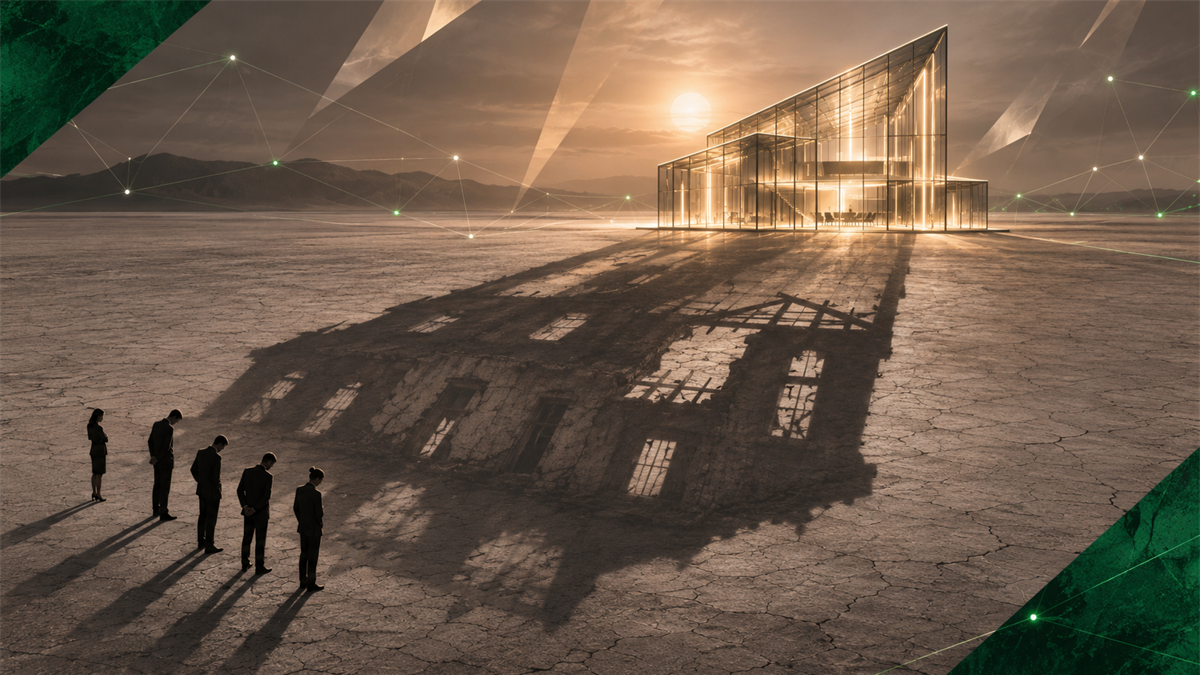
That gap has a name worth using inside any organization going through serious change: the reputation lag. Reputation reports on what an organization used to be. A transformation can do everything it promised and still be judged, by customers, investors and its own people, on the version of the company that existed before the work started. The lag isn’t a communications glitch to be patched at the end. It’s a predictable phase of change, it runs for years rather than months, and it needs its own plan and its own owner.
Perception Runs Years Behind Reality
The best long-run evidence comes from marketing research. Debanjan Mitra and Peter Golder studied 241 products across 46 categories from 1989 to 2000, matching Consumer Reports quality ratings against annual consumer surveys of more than 30,000 people. They wanted to know how long it takes for a real change in quality to show up in what customers believe.3
The answer was sobering. In the year a product actually got better, perceived quality moved by only about 10 percent of the improvement. The full effect took between five and eight years to arrive. Brands with strong reputations got credit for improvements about three years sooner than others and were penalized for declines about a year later. Mitra and Golder also found that a drop in quality hit perceptions harder in the short term than an equal gain.3
Put plainly, an organization that improves gets paid slowly, and an organization that slips gets billed fast. Most transformation business cases book the reputational benefit in the same year as the operational one.
The Same Gap Inside the Building
Employees run on old information too. Their version of the company’s reputation is built from every past initiative they lived through, and it updates slowly.
In January 2026, Bain & Company published research on nearly 1,000 executives and employees who had been through a reorganization. Eighty-eight percent of leaders were confident the new structure would achieve its goals. Thirty-six percent of employees agreed. More than 80 percent of leaders believed they were communicating and supporting people well, against 57 percent of middle managers.4 The Adecco Group’s 2026 workforce study of 17,750 workers and leaders found a similar split. Forty-four percent of leaders were strongly confident in their executive team’s ability to lead transformation, while 29 percent of workers were strongly confident in leadership’s ability to make strategic decisions.5
Part of that gap is real disagreement about whether the change is working. Part of it is lag. Leaders see the redesigned process, the new dashboard and the cleaner decision path because they built them. Employees see the same three meetings they had last year, and they remember the last two programs that were announced with the same confidence and then faded out. Until their own Tuesday looks different, the old reputation wins.
Why Better Work Doesn’t Speak for Itself
Robert Eccles, Scott Newquist and Roland Schatz made the point in Harvard Business Review back in 2007. Reputation, they wrote, is a matter of perception, and it can sit above or below reality. The first case, a reputation that outruns what a company can deliver, gets most of the worry. The second gets far less. Companies that improve may not get full credit. Their example was Detroit. By 2001 Chrysler, Ford and General Motors had largely closed the quality gap with Japanese manufacturers, and consumers remained skeptical.6
There are ordinary reasons for this. Improvement tends to be invisible by design. A shorter approval chain, a faster close or fewer defects show up as the absence of a problem, and people don’t notice what stopped happening to them. Failures, meanwhile, come with a story. And every stakeholder has seen announcements before. A claim that the company has changed sounds identical whether it’s true or not, so experienced people discount all of them.
Say What Was Wrong
Domino’s offers the clearest example of an organization closing the lag on purpose rather than waiting it out. By 2009 the company had been through three weak years in which U.S. same-store sales fell a cumulative 10 percent, and its stock was trading in the low single digits.7 It rebuilt its pizza from the crust up. In taste tests the new recipe scored better than anything the company had made. But decades of selling speed and efficiency had worn down its reputation for taste, and a better pizza alone wasn’t going to move that.8
So the company did something most leadership teams would veto in the first review. The campaign that launched in late December 2009 put customer criticism of the old pizza on screen and agreed with it. Domino’s reported same-store sales up more than 14 percent in the following quarter.8 Patrick Doyle became CEO in 2010, and the company went on to post more than 26 straight quarters of U.S. same-store sales growth.7
For transformation leaders the useful part is the order of operations. Domino’s fixed the product first, then named the old problem in the same words customers used. People can’t update a belief that nobody acknowledges they hold. An organization that announces it has changed without saying what it changed from is asking people to take its word for it, and they’ve heard that word before.
Put a Cost Behind the Claim
Hyundai’s version of the same move came earlier. In 1998, after recalls and poor ratings, the company introduced a 10-year, 100,000-mile powertrain warranty, the most generous in the industry. It also wrote quality into performance reviews.2
A warranty is a promise with a price attached. If the cars had stayed unreliable, the claims would have cost Hyundai a fortune. Buyers understood that, which is why the warranty worked as evidence in a way no advertisement could. It gave skeptical buyers a reason to try the car while the reputation caught up.
Internal transformations have their own versions of a warranty. A leadership team that commits to retiring three old reports on a named date, or guarantees a response time on a process it redesigned, or publishes the before and after on something employees care about, is putting a cost behind the claim. If the commitment slips, everyone will see it. That exposure is exactly what makes it believable.
Plan for the Lag
Treating the reputation lag as a phase of the work changes a few practical things.
Name the old story out loud. Before announcing what’s new, write down the sentence customers or employees use about the organization today, in their words, and decide how the change answers it. If nobody can write that sentence, nobody has asked.
Find the moments people actually meet the change. Reputation updates through direct experience: a call to the service desk, an approval that comes back in a day, a manager who decides without escalating. Pick the few encounters each stakeholder group has most often and make sure those show the difference first.
Track perception separately from performance. Operational metrics say whether the change worked. They don’t say whether anyone believes it worked. Run a simple perception check with each audience at the start and every six months after, and expect it to trail the operational numbers by a long way.
Fund the lag as well as the launch. If the research is anywhere close, full credit for a real improvement arrives over years. A program that disbands at go-live leaves nobody in charge of the period when the reputation is still catching up, and that’s the period when skeptics decide whether the change was real.
The Credit Comes Later
A transformation that works and goes unnoticed is still a success, but a fragile one. Talented people leave because they believe the old story. Boards lose patience in year two and start the next initiative before the last one has been believed.
Hyundai’s quality numbers caught Honda’s in 2004. The reputation took most of another decade. Leaders who budget for that gap and put something at stake to close it give their transformation a fair chance of being recognized for what it did.
References
- Les Christie, “Hyundai ties Honda in quality survey,” CNN/Money, April 28, 2004, on the J.D. Power and Associates 2004 Initial Quality Study.
- Doron Levin, “How Korean car makers beat out the Japanese,” Fortune, June 29, 2015.
- Debanjan Mitra and Peter N. Golder, “Quality Control,” SternBusiness, NYU Stern, Spring 2007, adapted from “How Does Objective Quality Affect Perceived Quality? Short-Term Effects, Long-Term Effects, and Asymmetries,” Marketing Science, 25(3), 2006.
- Bain & Company, “88% of leaders are confident their reorganization will deliver, only 36% of employees agree,” press release, January 29, 2026.
- John Brazier, “Leaders see progress, employees see friction: Inside the change capability divide,” UNLEASH, October 20, 2026, on The Adecco Group’s report “A new workforce reality.”
- Robert G. Eccles, Scott C. Newquist, and Roland Schatz, “Reputation and Its Risks,” Harvard Business Review, February 2007.
- Jonathan Maze, “5 lessons from Domino’s comeback,” Restaurant Business.
- WARC, “Domino’s: Pizza Turnaround,” Cannes Lions case study, June 20, 2011.